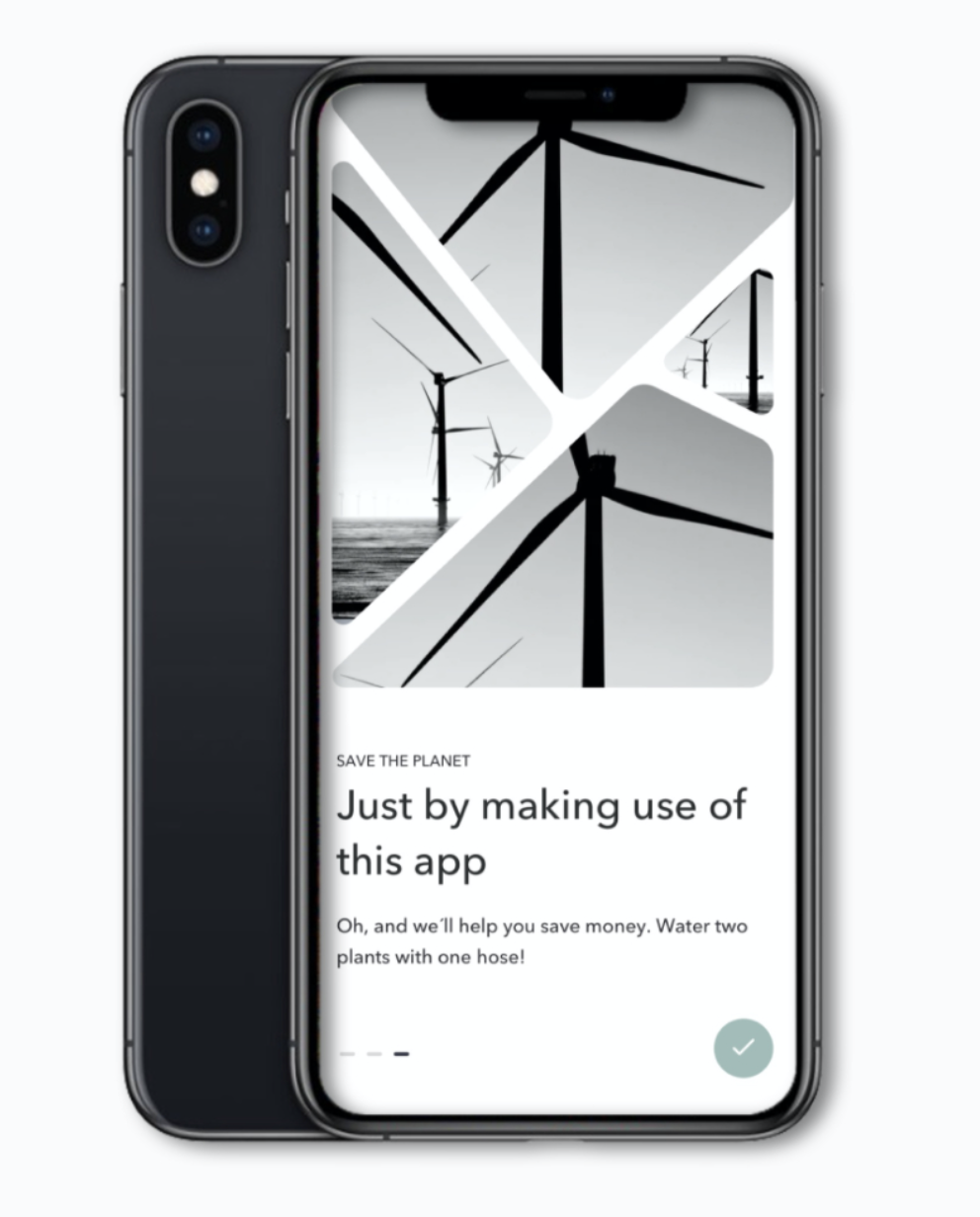
Empowering Users with CO2
Increasing awareness of the environmental impact of financial spending and consumption behvaiour
Role:
Research, ideation, visuals, prototype
Tools:
Sketch, InVision
Timeline:
Four months
Type:
Mobile application (iOS)
Overview & how it started
This exciting and educational project provided me with the unique opportunity to work together with my then new employer, Tieto and their white label and native application "My Cards". In its essence, “My Cards” is a digital extension of a user’s wallet, where both physical and virtual cards are at one’s disposal. Despite being rather well established within the Norwegian and British banking worlds, Tieto was still looking to expand and offer their customers new solutions. On the roadmap for 2021, was a complete redesign of the application, as well as the implementation of user’s carbon footprint. This is where I came in. 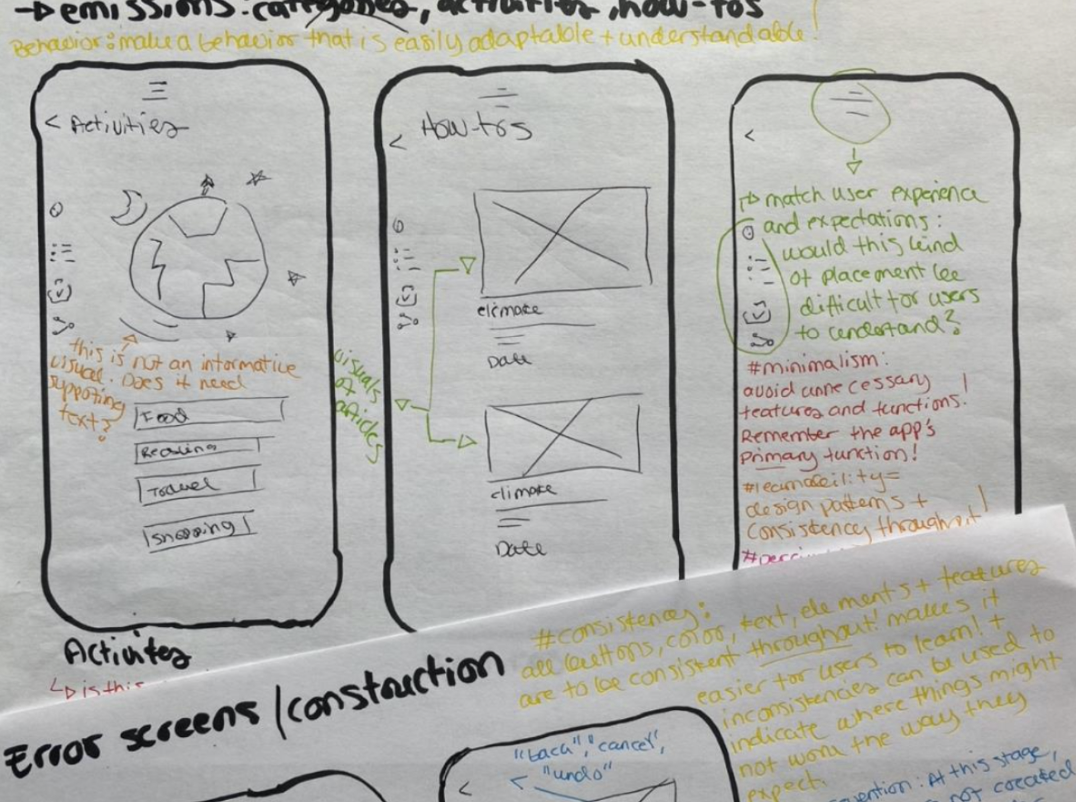
Project goal
The overall goal of the project was to create a user-friendly feature for the application “My Cards”. The feature was to provide users with an overview of their carbon footprint, essentially prompting behavioural change in their shopping habits, that would in turn lead to lower CO2 emissions. However, I ultimately determined to think outside the box, and hopefully surpass expectations. Not only did I want to present the CO2 emissions in a user-friendly manner, but I also wanted to set my sight on creating a more interesting solution - a mini-app of its own. The reason being that I wanted to bring about engagement and interaction from users. I welcomed this fun and challenging opportunity to work on the application, and to hopefully contribute to saving the environment with Design Thinking - even just a little. As I moved on towards conducting my research, I hoped that the app would be both accessible and appealing to the masses. And the defined goal was to create a digital solution that would empower users and prompt behavioural change with CO2 data. 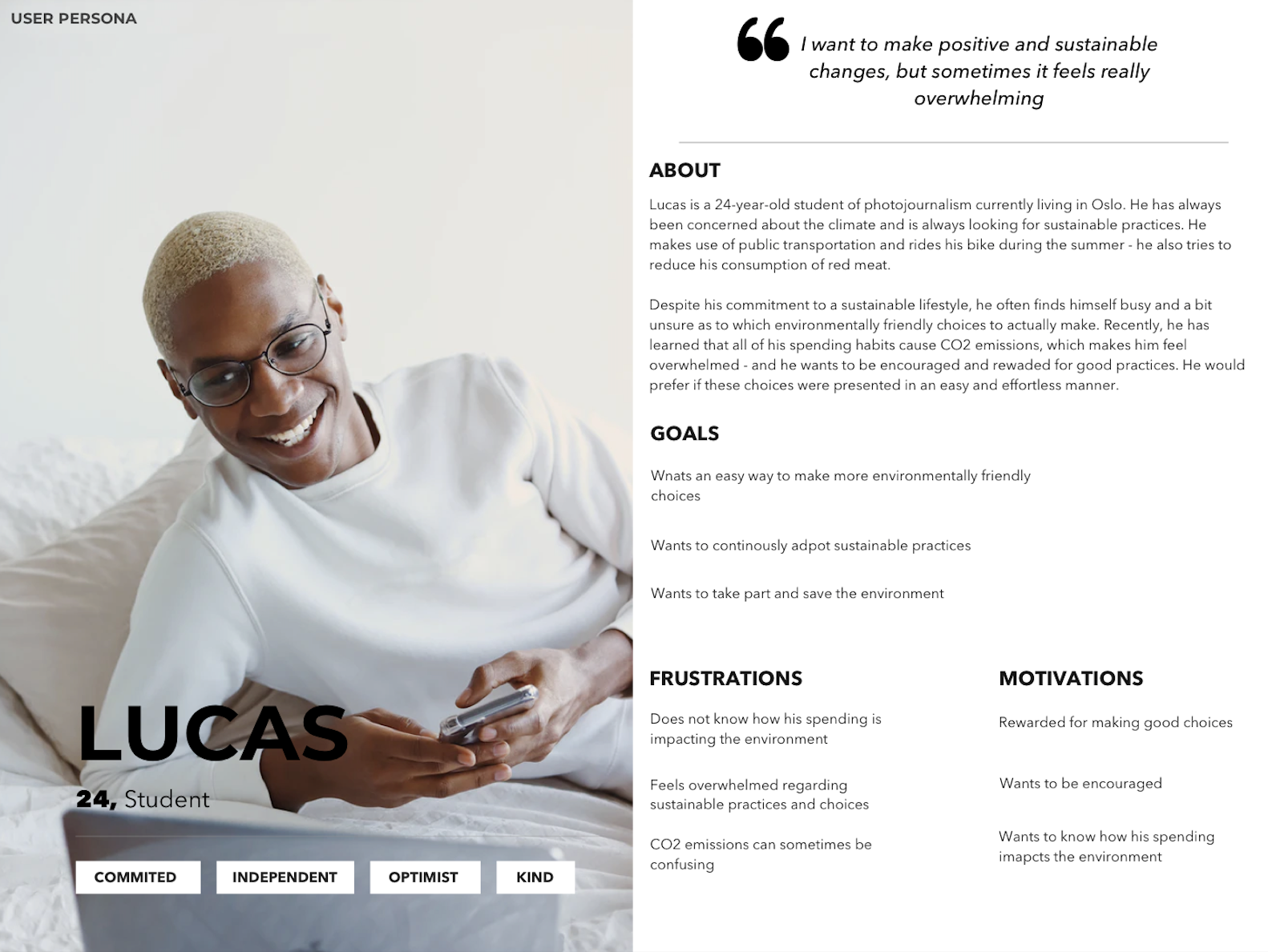
Research
Having defined my overall goal, narrowed the scope of the project, I moved on to the secondary and primary research. I was predominantly interested in gathering information about similar apps and features. However, user attitudes towards such a feature, their willingness to adapt to more sustainable habits, as well as its impact, was also of great interest. Secondary research
The research did show that Norwegians want something to be done in order to cut greenhouse gas emissions - but not how they would like to see the cuts made.
Primary research
The primary research showed that users were in need of more information and knowledge to make behavioural change.
Ideation: challenging assumptions and creating ideas
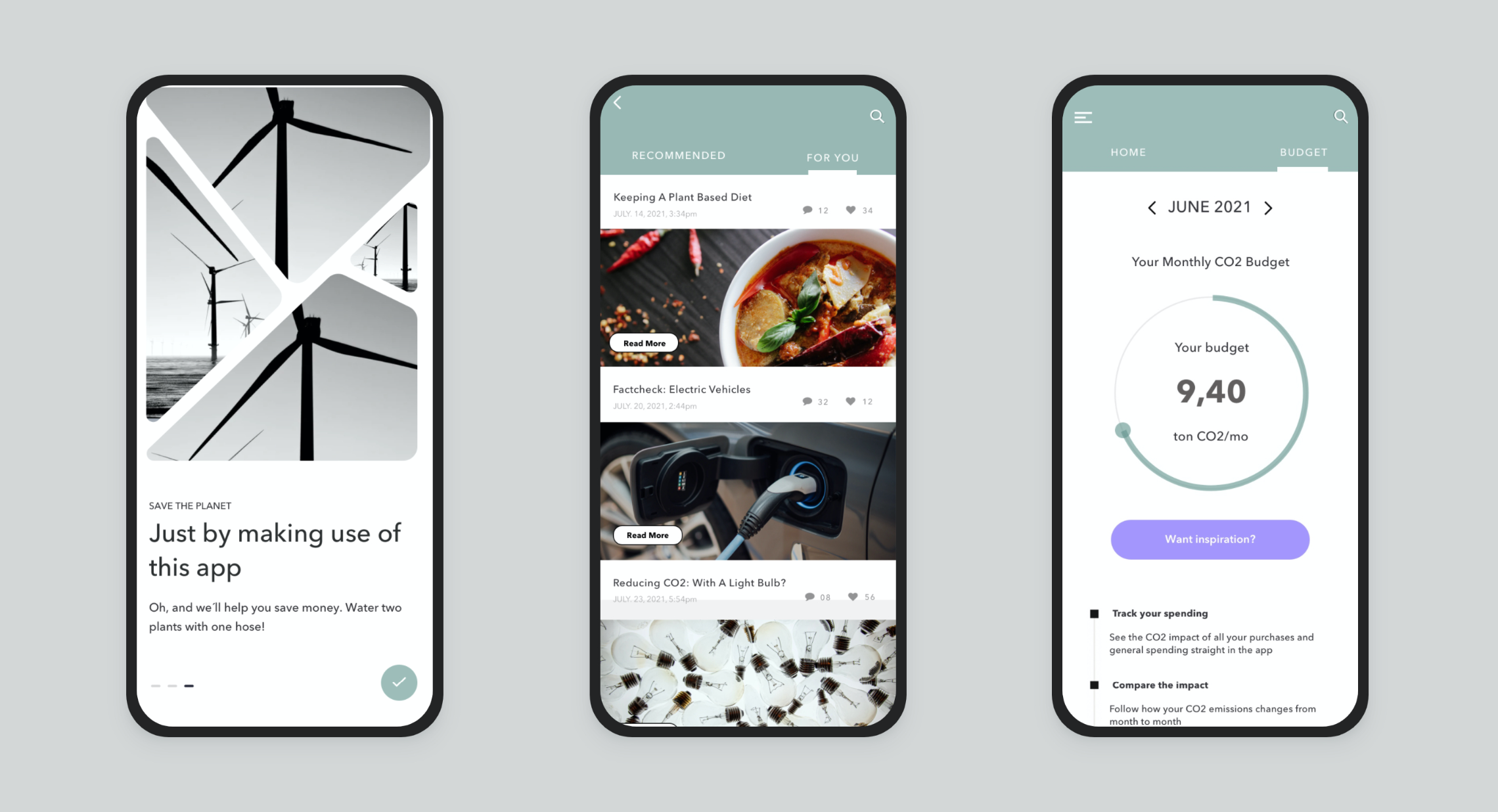
Following the secondary and primary research, and generating potential solutions through divergent thinking, I moved on to turn the ideas into a tangible product. This resulted in a prototype of a mobile application offering users an overview of their CO2 emissions, their spending and transactions that led to the emissions, as well as the opportunity to set their own carbon budget. 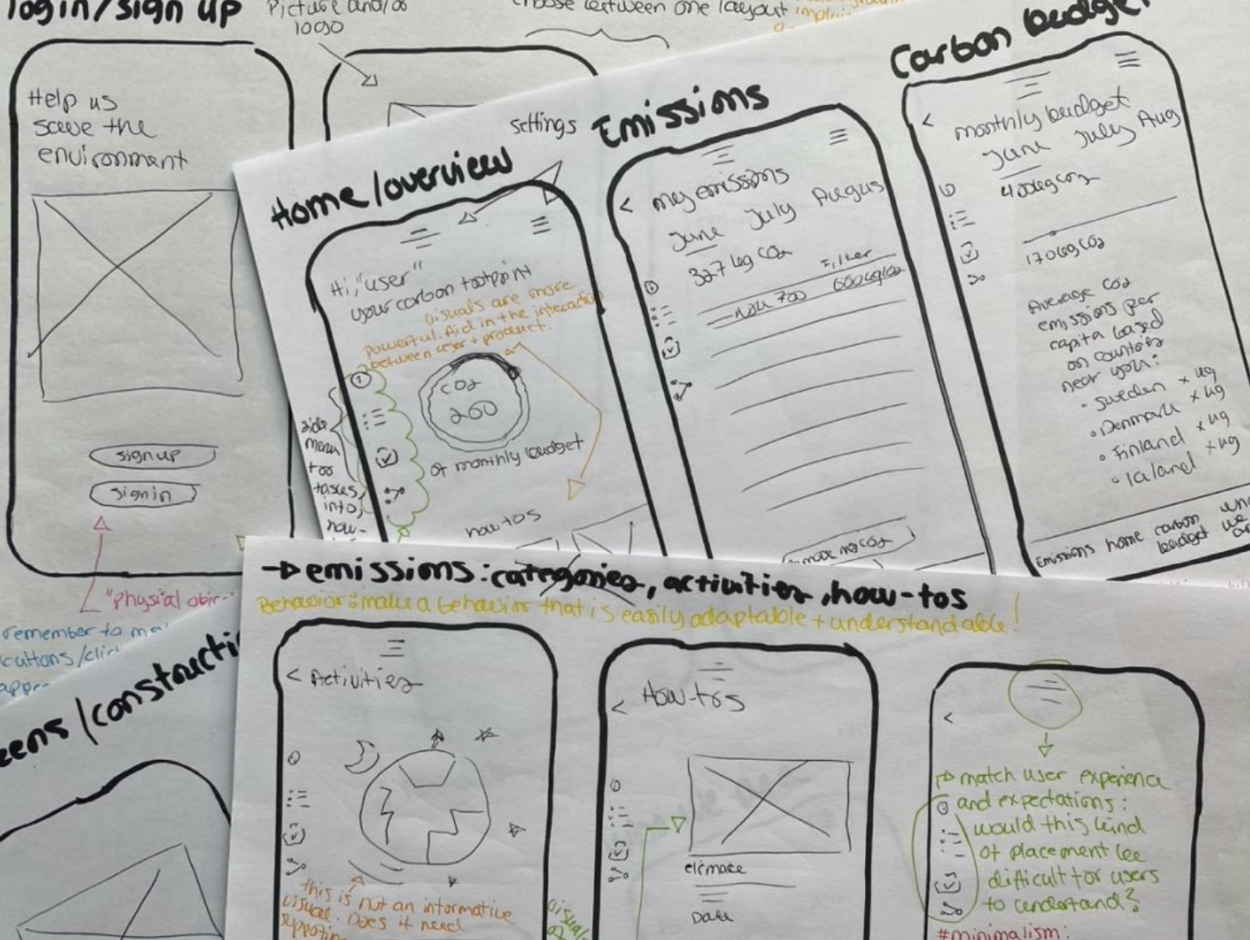
Usability test: putting the solution to the test
Having finalised the prototype, what followed was the usability test - allowing me to make note of possible usability problems. My initial thought going into the test, was to test the prototype on a mobile device - allowing the participants to test the application on a device they were familiar with. However, due to technical difficulties with screen recording on mobile, and restrictions with the prototyping tool, I ultimately determined to test the prototype on a desktop, as this had the least of disadvantages and limitations. Overall, all four participants were rather fascinated with the application and the concept. They were eager to participate in the session, and to provide their honest opinion and feedback. Thanks to their enthusiasm and commitment, I was able to round off the sessions with a large amount of premium data. Learnings & areas for improvements
As the project was coming to an end, I wanted to review the work I had done trying to change user behaviours and attitudes - all through the Design Thinking process and in creating an emissions overview. I ventured into this project rather unaware, but all the more eager to explore the topic of CO2 emissions in connection to individuals spending habits and how a technology-based product could contribute. And at the end of this inspiring, yet challenging journey, I could positively say that I managed to reach my goal, and more. Although, not without any obstacles along the way. I stated the project with great commitment and willingness, as well as a strong interest in both fintech and climate issues. However, I was in for a reality check, as climate issues and CO2 emissions are large and extensive subjects. And I ultimately had to narrow down the information I was in need of, as well as determine what kind of direction I was to go in. There were also times where it all felt a bit overwhelming, and I did question my own abilities - perhaps this was too big of a project to work on by myself? Due to the large scale of the project, and the fact that I worked alone, I did fint it a bit challenging trying to recruit five participants for the usability test. And so, an area for improvement would be to scale down large and extensive subjects. Despite being faced with such large questions and running into a couple of hiccups along the way, I did manage to make use of the different stages of the Design Thinking process to create a prototype of an application with the aim of changing user behaviours and attitudes through an emissions overview. And I was once again able to complete a project, that in turn allowed me to accumulate new knowledge for the many projects ahead.